
5 Signs You Need to Upgrade Your Electrical Panel

Your electrical control panel is the heart of your home or business’s electrical system. It distributes power to every room, appliance, and device, ensuring everything runs smoothly and safely. However, like any other component of your property, your electrical panel can become outdated or overloaded over time. Ignoring the signs that it needs an upgrade can lead to significant safety risks and efficiency problems. Here are five signs that it might be time to consider upgrading your electrical control panel.

If your circuit breakers are tripping frequently, it’s a clear indication that your electrical control panel is struggling to keep up with the demand. Circuit breakers are designed to shut off power to prevent overheating and potential fire hazards. If this is happening often, it’s a sign that your panel might be overloaded or that the circuits are no longer capable of handling the electrical load of your home or business.

Flickering or dimming lights, especially when you turn on certain appliances, can indicate that your electrical control panel isn’t distributing power properly. This could be due to an outdated panel or insufficient wiring. Upgrading your panel can ensure that your lights and appliances receive the consistent power they need to function correctly.
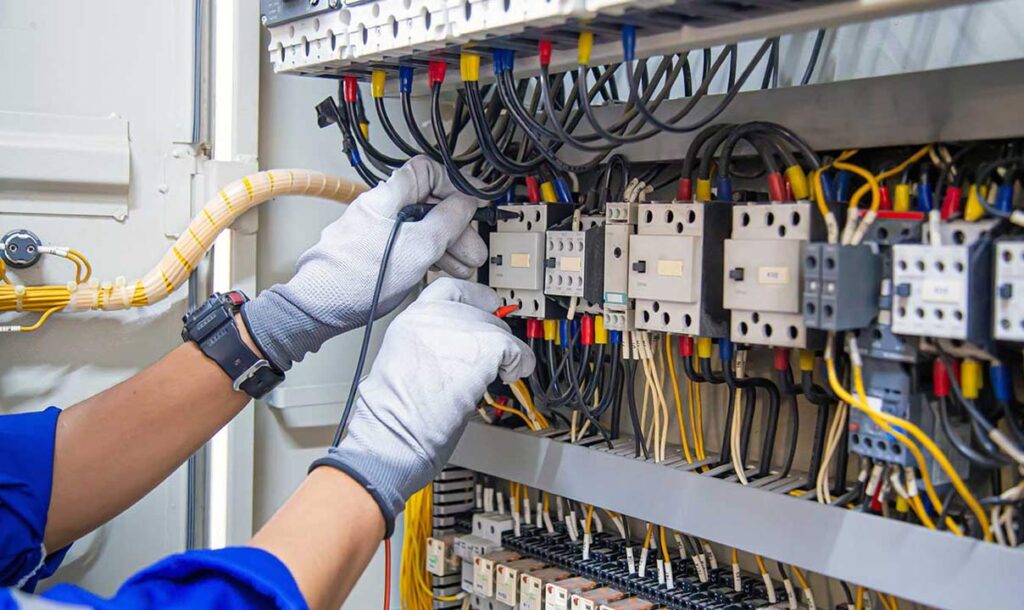
If you find yourself relying heavily on power strips and extension cords to accommodate your electrical needs, it might be a sign that your electrical control panel is outdated. Modern appliances and electronics require more power, and an older panel might not have enough circuits to handle the load. Upgrading your panel can provide more circuits and reduce the need for additional cords, which can be a safety hazard. 

Read more....

Comments

Popular posts from this blog

Understanding Switchgear Basics

Switchgear is an essential component in electrical systems, helping to manage, protect, and control power flow. Whether it’s for industrial setups or commercial buildings, switchgear ensures that electrical circuits function safely and efficiently. With the growing demand for safe power distribution, it’s important to understand what switchgear is and how it works. What is Switchgear? Switchgear is a combination of electrical disconnect switches, circuit breakers, and fuses that control, protect, and isolate electrical equipment. It is used to de-energize equipment for maintenance or to clear faults in a power system. Without  low voltage switchgear , it would be extremely dangerous and challenging to manage electrical systems, especially in large-scale operations. Switchgear is broadly classified into two types based on the voltage level: low voltage (LV) and high voltage (HV).  Low-voltage switchgear  is typically used in buildings, data centers, and industrial faciliti...

How to Choose the Right Telemecanique Photoelectric Sensor for Your Application

Choosing the right photoelectric sensor for your specific application can be a game-changer in optimizing efficiency and performance in various industries. Telemecanique, a leading brand in automation and control, offers a wide range of photoelectric sensors designed to meet diverse needs. At Balaji Switchgears, we understand the importance of selecting the right sensor for your application, ensuring optimal performance and reliability. Understanding Telemecanique Photoelectric Sensor Types Telemecanique offers several types of photoelectric sensors, each with unique characteristics and advantages. Understanding these  Telemecanique photoelectric sensor types  is the first step toward making an informed choice. 1. Through-Beam Sensors Through-beam sensors consist of a separate emitter and receiver. The emitter projects a beam of light towards the receiver, and the sensor detects the object when the beam is interrupted. These sensors are ideal for applications requiring long se...

Why Power Factor Correction Panels Are Essential

In today’s energy-conscious world, optimizing power consumption has become a top priority for businesses and industries. Power factor correction (PFC) panels play a crucial role in improving power quality and reducing energy costs. In this blog post, we’ll delve into the importance of PFC panels and how they can benefit your operations. Understanding Power Factor Power factor is a measure of how efficiently electrical power is being used. It’s the ratio of real power (used to do work) to apparent power (total power supplied). Ideally, a power factor of 1 indicates maximum efficiency, but in reality, most electrical systems have a lagging power factor due to inductive loads like motors and transformers. The Impact of Low Power Factor A low power factor can lead to several negative consequences: Increased Energy Costs: Lower power factor results in higher electricity bills as utilities often charge penalties for poor power quality. Reduced System Capacity: Inefficient power utilization c...